

Computing
At Waterloo Primary Academy, we believe that computing is an essential part of preparing children for the future. Technology shapes the world around us and our computing curriculum equips pupils with the knowledge, skills, and confidence to become creative, responsible, and safe users of technology. Our computing curriculum empowers children to aim high, believe in themselves, and understand the vital role they can play in an ever-changing digital world. Through engaging, practical, and purposeful learning experiences, pupils develop computational thinking, problem-solving skills, creativity, and resilience. Through high-quality computing education, we prepare our pupils for a rapidly evolving digital world and encourage them to see themselves as future creators - not just consumers - of technology.
Our Computing Curriculum
We use the Teach Computing curriculum is designed to ensure pupils build knowledge progressively across three key strands:
- Computer Science – understanding how computers work and creating programs
- Information Technology – using technology purposefully to create, organise, and communicate
- Digital Literacy – learning how to use technology safely, respectfully, and responsibly
Children experience a broad range of opportunities including programming, digital media, data handling, online safety, physical computing, and creative technology projects.
How We Teach Computing
Our teaching is informed by the principles of effective computing pedagogy developed by the National Centre for Computing Education and the Raspberry Pi Foundation.
Lead with Concepts
We develop pupils’ understanding through clear teaching of key vocabulary, concepts, and terminology. Regular recall, discussion, and visual tools such as concept maps help children build secure understanding over time.
Work Together
Collaboration is central to our computing lessons. Pupils regularly work in pairs and groups through activities such as pair programming, peer discussion, and shared problem-solving.
Get Hands-On
Children learn best through practical experiences. We provide opportunities for pupils to explore physical computing, robotics, and creative digital projects that combine programming with real-world applications.
Unplug, Unpack, Repack
Complex computing ideas are broken down into simple, relatable experiences before pupils apply them back into digital contexts. This helps children develop deeper understanding and confidence.
Model Everything
Teachers demonstrate processes clearly through live modelling, worked examples, and shared debugging. This supports pupils in understanding how successful programmers think and work.
Foster Program Comprehension
Children are encouraged to read, trace, predict, and debug code regularly. Understanding existing code helps pupils become stronger and more independent programmers.
Create Projects
Project-based learning gives pupils opportunities to apply their skills creatively and purposefully. Children design, create, evaluate, and improve digital products for different audiences and purposes.
Add Variety
Lessons include a balance of structured guidance and open-ended exploration. This ensures all learners are supported and challenged appropriately.
Challenge Misconceptions
Teachers use questioning, discussion, and formative assessment to identify misconceptions and address them quickly, helping pupils build secure knowledge.
Make Learning Concrete
Abstract concepts are linked to real-life contexts and cross-curricular learning wherever possible, helping children understand the relevance of computing in everyday life.
Structure Lessons
We use research-informed approaches such as PRIMM (Predict, Run, Investigate, Modify, Make) to support pupils in developing confidence and independence in programming.
Read and Explore Code First
Before writing their own programs, pupils spend time reading and understanding existing code. This strengthens comprehension and improves coding fluency.
Online Safety
Online safety is woven throughout our computing curriculum and wider school life. Pupils learn how to stay safe online, protect their personal information, communicate respectfully, and report concerns confidently. We work closely with families to promote positive and safe technology use both in school and at home.
Structure
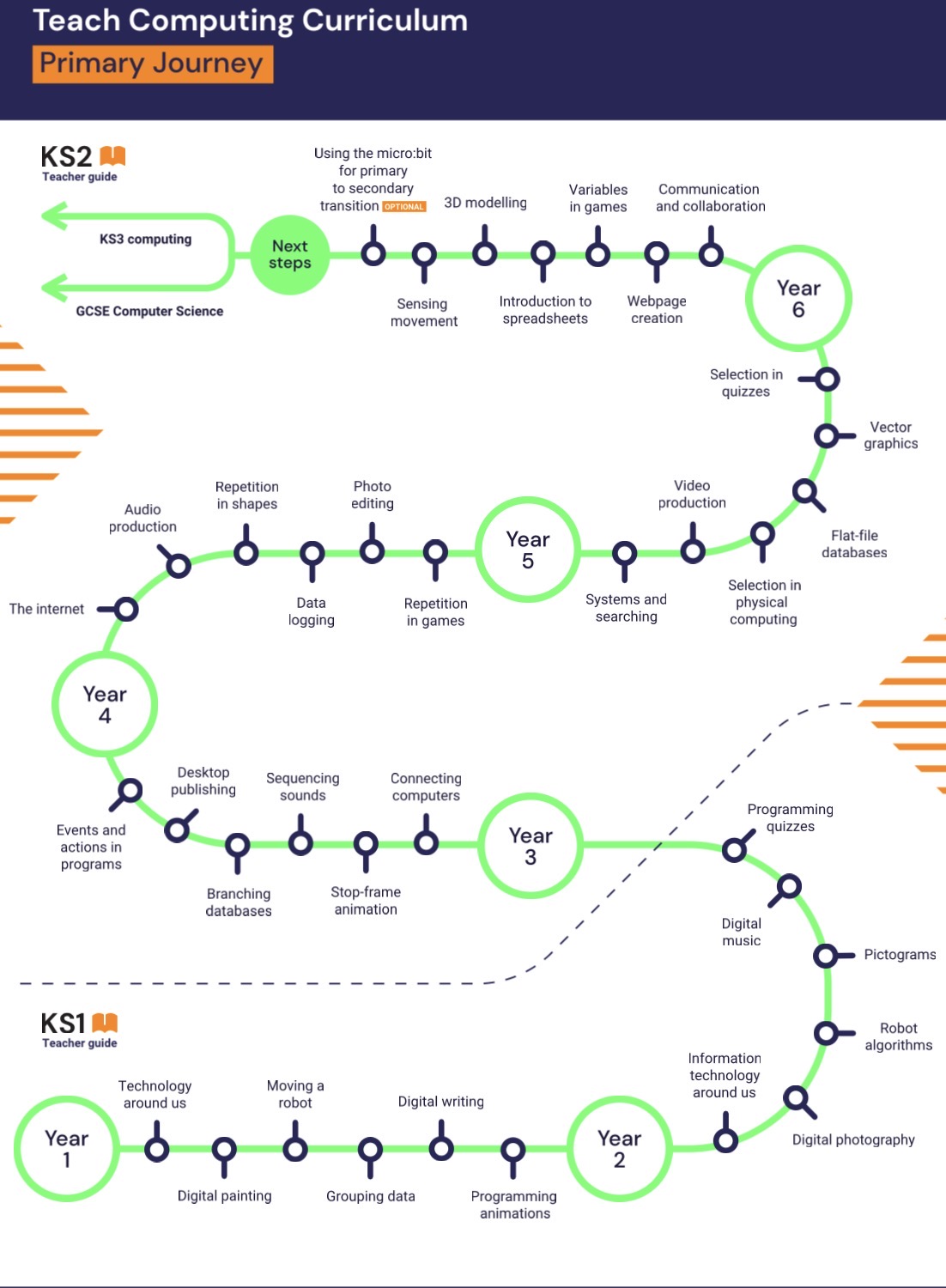
The Teach Computing curriculum is structured into units for each year group, and build on prior knowledge and skills. Units can be taught in any order, with the exception of programming, where concepts and skills rely on prior knowledge and experiences.
Assessment
Our approach to assessment is both formative and summative, allowing teachers to monitor progress continuously and celebrate achievement across all areas of computing.
Teachers assess pupils throughout lessons using:
- Questioning and discussion
- Observation of practical tasks
- Live feedback and verbal support
- Debugging and problem-solving activities
- Retrieval practice and quizzes
- Peer and self-assessment opportunities
Assessing Programming and Digital Skills
Children demonstrate their understanding through a range of practical outcomes, including:
- Programming projects
- Digital presentations and media
- Data handling activities
- Problem-solving tasks
- Collaborative projects
- Online safety scenarios and discussions
Teachers assess not only the final outcome, but also pupils’ understanding, creativity, resilience, and ability to explain their thinking.
Supporting All Learners
Assessment is used to ensure all pupils are appropriately supported and challenged. Lessons are adapted to meet the needs of different learners, enabling every child to experience success and make progress in computing.
Monitoring and Evaluation
The impact of the computing curriculum is monitored through:
- Pupil voice
- Lesson visits
- Work scrutiny
- Teacher assessment
- Curriculum reviews
This ensures that computing remains engaging, ambitious, and effective for all pupils across the school.